Categories
Earth & Climate Energy & Matter Researcher news SMU In The News Technology

Science News: Hints of dark matter reported, again

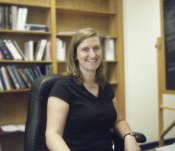
Science News quotes SMU physicist Dr. Jodi Cooley in its Sept. 12 report “Hints of dark matter reported, again.”

The online story notes that two of the world’s particle detectors differ on whether dark matter has been spotted. Science journalist Devin Powell asked Cooley, assistant professor of experimental particle physics in SMU’s Physics Department, to weigh in on the matter.

Cooley is part of the international collaboration of scientists that is hunting for dark matter on the CDMS II experiment in Minnesota’s Soudan mine.

Read the full story.

EXCERPT:

By Devin Powell
Science News

In the war of the WIMPs, a new combatant has joined the fray. The CRESST-II experiment has seen hints of the weakly interacting massive particles, a leading candidate for the hidden dark matter thought to account for most of the universe’s matter.

The new results, reported September 6 at the International Conference on Topics in Astroparticle and Underground Physics in Munich, add controversy to an already contentious field that is divided into two camps: those that have seen signs of the particles and those that haven’t.

“It’s another small victory for those arguing that this is dark matter, but it’s not going to decisively determine anything,” says theorist Dan Hooper of the University of Chicago and the Fermi National Accelerator Laboratory in Batavia, Ill. “We still haven’t seen a smoking gun.”

To further complicate the picture, though, these two experiments must be reconciled with results from the DAMA/LIBRA experiment. Its sodium iodide detector in Gran Sasso has found evidence for WIMPs that suggests slightly different properties for the particles than what’s been hinted at in the more recent work.

“I don’t think we know for sure exactly what is going on,” says Jodi Cooley, a particle physicist at Southern Methodist University in Dallas. “Based on the understanding we have of dark matter and how it behaves, I’m not sure how much agreement I would say that these experiments have.”

Cooley works on the CDMS II experiment in Minnesota’s Soudan mine, one of two detectors that have seen no signs of dark matter or its purported particles at all. XENON100, which searches for dark matter using a tank of noble gas in Gran Sasso, has ruled out all of the WIMPs proposed by CRESST-II and its compatriots.

Read the full story.

Cooley also was quoted in a story by Physicsworld.com, “CRESST uncovers hint of dark matter,” published online Sept. 8.

EXCERPT:

… The question is whether the signal from CRESST, which points to a relatively light WIMP, can be reconciled with results from other direct-detection experiments. DAMA and CoGeNT have both recorded positive signals, but not for WIMPs with the same range of properties. Worse, the CRESST signal suggests a WIMP with properties that had previously been ruled-out by experiments such as XENON and CDMS, the latter of which is based at the Soudan mine.

“It is clear that it is difficult to reconcile the results from CDMS, XENON, CRESST and other dark-matter experiments with a single, simple dark-matter interpretation,” says Jodi Cooley, a physicist at the Southern Methodist University in Texas, US, who works on the CDMS experiment. “So, that leaves one of two possibilities. Either dark matter is behaving in a very strange way that we do not understand, or the backgrounds in the CRESST experiment are not well enough understood. To me, these results underline the need to have experiments that are capable of operating a mode where background subtraction is not necessary.”

Not everyone agrees. The properties of a detected WIMP are estimates, liable to change with varying assumptions about the equipment used. This leads some physicists to believe that the positive results can be reconciled.
Read the full story.

Categories
Energy & Matter Researcher news SMU In The News

WFAA: Super Collider’s legacy lives on in Switzerland

WFAA-TV reporter David Schechter covered SMU’s participation in the largest physics experiment in the world, the Large Hadron Collider at the European Organization for Nuclear Research — or CERN — in Geneva.

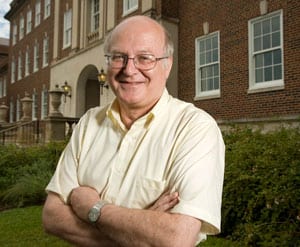
SMU physicist and physics professor Ryszard Stroynowski is U.S. Coordinator for the Liquid Argon Calorimeter, the literal and experimental heart of ATLAS, the largest particle detector in the LHC array.

The Channel 8 story explored the connection between the LHC and the Superconducting Super Collider, a particle detector that was under construction in North Texas until 1993, when its funding disappeared as Congress attempted to balance the budget. WFAA’s story, “Super Collider’s legacy lives on in Switzerland,” aired March 22.

Stroynowski leads an SMU delegation that includes Fredrick Olness, professor of physics, Robert Kehoe and Jingbo Ye, associate professors of physics, and Stephen Sekula, assistant professor of physics, all in Dedman College.

The SMU team is focusing on three projects in parallel:

  • improvements of the graphic and software interfaces for control and monitoring of the detector and of the quality of its data
  • preparation of the software packages to analyze the data
  • design and prototyping of the modifications of the readout electronics that will be needed for future upgrades of the experiment to much higher-intensity beams — a six-year research and development project led by Jingbo Ye in SMU’s Physics Electronics Lab.

The LHC is considered the world’s largest physics experiment. The particle accelerator is a 27-kilometer circular tunnel that lies 100 meters underground near Geneva on the French-Swiss border. It uses a magnetic field to propel high-energy protons into each other.

The LHC’s proton collisions release even smaller pieces of matter, and the Atlas particle detector helps measure the tracks they leave. The huge, international project is directed at finding the “Higgs boson,” a subatomic “God particle” that physicists believe could help explain the origin of our Universe.

The theory behind the Higgs boson holds that all particles had no mass just after the “Big Bang.” As the Universe cooled and the temperature fell below a critical value, an invisible force field composed of subatomic particles called the “Higgs boson” developed throughout the cosmos. Particles that interact with the field gain mass and particles that never interact have no mass. But the theory remains unproven because no one has ever seen the Higgs boson at work

Read the full story.

EXCERPT:

By David Schechter
WFAA-TV Channel 8

Did Congress kill the golden goose?

The massive Superconducting Super Collider project was supposed to be built in a 54-mile circular underground cavern near Waxahachie, but it fell victim to federal budget cuts almost two decades ago.

Some people argue that had it survived, the Super Collider would have spawned new ideas, industry, investment — and jobs in North Texas.

But the Super Bowl of science projects has moved on without us, taking its economic benefits with it.

The Large Hadron Collider near Geneva, Switzerland makes so many big claims it would, no doubt, fit right in here in Texas.

It is the largest machine in the world — over 16 miles long.

It operates the most powerful computer in the world.

And the LHC is on the verge of making one of mankind’s most important scientific discoveries.

SMU physics professor Dr. Ryszard Stroynowski, who shuttles between Dallas and Geneva, is a key player in the search for a single particle that — if discovered — could fundamentally explain how our universe works.

“I haven’t been in such a state of anticipation ever since I was a student, some 40-some years ago,” he said.

But it’s been a long road. Stroynowski came to SMU in 1991, when the Superconducting Super Collider was under construction in Ellis County. The project was designed for similar research until it was killed by Congress in 1993 to help balance the budget.

Read the full story.

SMU has an uplink facility on campus for live TV, radio or online interviews. To speak with Dr. Stroynowski or to book him in the SMU studio, call SMU News & Communications at 214-768-7650 or UT Dallas Office of Media Relations at 972-883-4321.

Categories
Energy & Matter Researcher news Slideshows SMU In The News Technology Videos

ABC 8: Minnesota mine could yield secrets of the universe to SMU professor

The search for mysterious dark matter at an abandoned mine in Minnesota is the subject of “Minnesota mine could yield secrets of the universe to SMU professor,” which first aired Nov. 24 on WFAA Channel 8 in Dallas.

WFAA reporter Jonathan Betz interviewed SMU scientist Jodi Cooley, an assistant professor of experimental particle physics in the SMU Physics Department.

Cooley is a member of the collaboration on the Cryogenic Dark Matter Search (CDMS II) experiment.

The experiment is located deep in the Soudan Underground Laboratory in the abandoned Soudan Underground Mine in a national park in Minnesota.

Cooley was part of a scientific group of experimental particle physicists who earlier reported in the journal Science that they couldn’t rule out that they may have seen a glimpse of dark matter.

Physicists have been searching for dark matter — the substance that makes up most of the matter in the universe — for decades.

Read the full story.

EXCERPT:

By Jonathan Betz
WFAA

SOUDAN, Minnesota — It’s invisible, but people still look for it.
It’s cosmic, but confusing.

We’re talking about “dark matter.” Find it, and it’s worth millions.

For SMU physicists that — and curiosity — make it worth the search.

SMU professor Jodi Cooley tries to teach how the universe works. Still, it’s a subject even she doesn’t fully understand.

“I’ve always been attracted to things that are hard or difficult,” she said. “If people say, ‘It can’t be done,’ I’ve always said, ‘Really? Are you sure? I’m going to go do it!'”

It’s a drive that sends her to extremes.

Twice a year, Professor Cooley embarks on a journey that she hopes will take her to the farthest reaches of the universe.

That quest is by way of Soudan, Minnesota — a four-hour drive north of Minneapolis. It’s a place where the skies open to land untouched by developers, and tiny towns forged a century ago by people working underground.

It’s those old iron mines that now draw the country’s top minds to this remote location.

“We’re on the cutting edge,” Cooley said. “We’re trying things nobody has tried to do.”
Her day starts before the sun rises, traveling deep underground using the same elevator the original miners took in the 1920s.

It’s a bone-rattling three-minute drop in complete darkness, taking Cooley 2,000 feet under the earth’s surface.

And it is a striking case of old meets new, where the most sophisticated technology known to man is found in a mine that was dug in the late 1800s.

Read the full story.

Categories
Energy & Matter Researcher news SMU In The News

Science News: SMU’s Cooley hopes dark matter search in Minnesota mine will yield results

The search for mysterious dark matter at an abandoned mine in Minnesota is the subject of “Mining for Missing Matter” in the Aug. 28 issue of Science News.

Journalist Ron Cowen interviewed SMU scientist Jodi Cooley, an assistant professor of experimental particle physics in the SMU Physics Department.

Cooley is a member of a scientific collaboration investigating dark matter, the Cryogenic Dark Matter Search experiment. It is located deep in the Soudan Underground Laboratory.

Cooley and her collaborators reported in the journal Science that they couldn’t rule out that they may have seen a glimpse of dark matter.

Physicists have been searching for dark matter — the substance that makes up most of the matter in the universe — for decades.

Cowan writes: ” ‘My hope is that the next generation of experiments will discover dark matter” within the next few years,’ says CDMS II researcher Jodi Cooley of Southern Methodist University in Dallas. After making their initial discovery, researchers could then tailor experiments to unveil dark matter’s detailed nature, she says.”

EXCERPT:

“The workers have journeyed deep into the Earth to plumb the darkest depths of the cosmos, hunting for the missing material believed to account for 83 percent of the universe’s mass.

That material, known as dark matter, must exist, astronomers say, because the cosmic allotment of ordinary, visible matter doesn’t provide enough gravitational glue to hold galaxies together. Although the missing material shouldn’t be any more prevalent in the underworld than above ground, dark matter hunters have good reason to frequent Soudan and other subterranean lairs. Because dark matter particles would interact so weakly, experiments designed to detect the dark stuff could easily be overwhelmed by the cacophony of other particles. So scientists at Soudan and elsewhere use Earth’s crust to filter out cosmic rays — charged particles from space that bombard Earth’s atmosphere.

Physicists have been directly searching for dark matter for more than two decades. But until recently, only one experiment, beneath a mountain in central Italy, had consistently reported evidence of the invisible particles. Now two more experiments have found similar hints. When taken together, the findings suggest that the most popular models for dark matter may not be correct — the particles pegged have a lower mass than many physicists had proposed.

Read the full story

Categories
Energy & Matter Researcher news

SMU physicist Nadolsky earns DOE Early Career Research Program Award

nadolsky_may10-.jpg

Southern Methodist University physicist Pavel Nadolsky will receive $750,000 over five years to fund his work in modeling particle interactions through a new program administered by the Office of Science, U.S. Department of Energy (DOE).

Nadolsky, assistant professor of theoretical physics in the SMU Department of Physics, received the grant for his integrated analysis of particle interactions created by hadron colliders. He was one of 69 researchers chosen through peer review by scientific experts to participate in the DOE’s new Early Career Research Program. About 1,750 applicants submitted proposals.

Funding meant to boost scientific workforce
Early Career Scientists receive funding under the American Recovery and Reinvestment Act of 2009 in an effort “to bolster the nation’s scientific workforce by providing support to exceptional researchers during the crucial early career years, when many scientists do their most formative work,” according to a DOE statement.

Nadolsky works with an SMU team of postdoctoral research associates and graduate students to model hypothetical interactions of subatomic particles for the biggest physics experiment in history: the Large Hadron Collider (LHC) near Geneva, Switzerland.

The LHC became fully operational on March 30, 2010, and the high-speed, high-energy particle collisions it creates will allow physicists to recreate conditions at the origin of the universe — and possibly discover the mechanisms that cause particles in space to acquire their differences in mass.

Tiny particle research aids search for new physics
As part of the effort to identify theoretical new particles such as the Higgs boson, Nadolsky develops highly detailed computer simulations both of known particle interactions and of the expected tiny deviations that LHC researchers hope to discover. Each collision produces a staggering amount of raw information, and the most useful bits are few and far between: Out of 40 million events per second, the researchers may be looking for as few as 10 events a year.

“The phenomena we’re looking for will be buried under a lot of known particles produced by ordinary means,” Nadolsky says. “Our task is to produce the most accurate models possible of known interactions, so we can recognize the interactions that deviate, and why.”

Without such models, identifying new events at the LHC would be difficult, if not impossible, he adds.

Nadolsky received his doctorate from Michigan State University in 2001 and joined SMU as a postdoctoral research fellow from 2001 to 2004. He also did postdoctoral research with the High Energy Physics Theory Group at Argonne National Laboratory in Illinois from 2004 to 2007. He returned to SMU as a faculty member in 2008. — Kathleen Tibbetts

Related links:
Lay person’s guide to particle physics
Pavel Nadolsky
SMU Group of Particle Phenomenology
Nadolsky lecture: Parton Distribution Functions
Department of Physics
Dedman College of Humanities and Sciences