Skip to the content
Explore SMU
  • Academics
  • Student Affairs
  • About
  • News
  • Events Calendar
  • SMU Research
  • Bush Center
  • Current Students
  • Alumni
  • Faculty & Staff
Apply to SMUContact SMU
Research
  • Latest News
  • Faculty Research
  • Student Research
  • SMU In The News
  • Research Topics
    • Culture, Society & Family
    • Earth & Climate
    • Economics & Statistics
    • Energy & Matter
    • Fossils & Ruins
    • Health & Medicine
    • Learning & Education
    • Mind & Brain
    • Plants & Animals
    • Technology
  • Latest News
  • Faculty Research
  • Student Research
  • SMU In The News

Category: SMU In The News

Categories
Mind & Brain Researcher news SMU In The News Student researchers Subfeature

Kids who blame themselves for mom’s sadness are more likely to face depression and anxiety

  • Post author By 46778533
  • Post date March 10, 2020
  • No Comments on Kids who blame themselves for mom’s sadness are more likely to face depression and anxiety

DALLAS (SMU) – “Even if she doesn’t say it, I know it’s my fault that my mother gets sad.” 

Kids who believe comments like this – assuming blame for their mom’s sadness or depression – are more likely to face depression and anxiety themselves, a new study led by SMU has found.

“Although mothers with higher levels of depressive symptoms face increased risk that their children will also experience symptoms of depression and anxiety, our study showed that this was not the case for all children,” said SMU family psychologist and lead author Chrystyna Kouros. “Rather, it was those children who felt they were to blame for their mother’s sadness or depression…that had higher levels of internalizing symptoms.”

In light of the findings, Kouros said it’s critical that parents and others who regularly interact with children pay close attention to the kinds of comments that kids make about their mom’s symptoms and to intervene if children incorrectly think that it’s their fault that their mom is depressed. Children who take on this blame can benefit from therapies and interventions that target negative thoughts, said Kouros, SMU associate professor of psychology.

Sharyl E. Wee and Chelsea N. Carson, graduate students at SMU, and Naomi Ekas, an associate professor of psychology at Texas Christian University, also contributed to the study, which was published in the Journal of Family Psychology. 

The study is based on surveys taken by 129 mothers and their children, who were recruited from the Dallas-Fort Worth community through schools, flyers and online advertisements. On average, children included in the study were 13 years old. 

Moms were asked to agree or disagree to 20 statements like “I could not shake off the blues” and “I lost interest in my usual activities” to assess if they had depressive symptoms, even if they had not actually been diagnosed with depression. Nearly 12 percent of the women surveyed were found to have potential clinical levels of depressive symptoms.

The moms were also asked to assess whether they felt their children had symptoms of depression and anxiety.

Kids, meanwhile, were asked to complete a total of four surveys to see if they were dealing with any anxiety or depression and whether they blamed themselves for any signs of depression in their mothers.

Kouros said there are two likely explanations for the linkage between mothers’ depressive symptoms and kids’ own mental health issues:

“If children blame themselves for their mothers’ depressive symptoms, then they may be more likely to brood about their mother’s symptoms. And we know from an extensive body of research that rumination over stressors – especially ones that are uncontrollable – is linked with depression and anxiety,” Kouros said. “Also, if children feel personally responsible for their mothers’ symptoms, they may try to ‘make it better’ and use ineffective coping strategies. This could lead to a sense of helplessness, failure, and low self-worth in the child, since ultimately the child was misattributing the cause of their mothers’ depressive symptoms.”

More studies are needed to see if depressed dads have the same effect on their children, Kouros said.

Many media outlets picked up the story, including KERA News, Moms, PsychCentral and The Federalist. 

About SMU

SMU is the nationally ranked global research university in the dynamic city of Dallas. SMU’s alumni, faculty and nearly 12,000 students in eight degree-granting schools demonstrate an entrepreneurial spirit as they lead change in their professions, communities and the world.

Categories
SMU In The News Subfeature

A year of surprising science from NASA’s InSight Mars Mission

  • Post author By 46778533
  • Post date February 25, 2020
  • No Comments on A year of surprising science from NASA’s InSight Mars Mission

A new understanding of Mars is beginning to emerge, thanks to the first year of NASA’s InSight lander mission. Findings described in a set of six papers published today reveal a planet alive with quakes, dust devils and strange magnetic pulses.

Five of the papers were published in Nature. An additional paper in Nature Communications details the InSight spacecraft’s landing site, a shallow crater nicknamed “Homestead hollow” in a region called Elysium Planitia.

InSight is the first mission dedicated to looking deep beneath the Martian surface. Among its science tools are a seismometer for detecting quakes, sensors for gauging wind and air pressure, a magnetometer, and a heat flow probe designed to take the planet’s temperature.

While the team continues to work on getting the probe into the Martian surface as intended, SMU planetary scientist and research assistant professor Matt Siegler is one of the scientists who will ultimately help determine what the measurements of the heat flow probe mean for the composition of the interior of Mars.

A cutaway view of Mars showing the Insight lander studying seismic activity. Credit: J.T. Keane/Nature Geoscience

Meanwhile, the ultra-sensitive seismometer, called the Seismic Experiment for Interior Structure (SEIS), has enabled scientists to “hear” multiple trembling events from hundreds to thousands of miles away.

Seismic waves are affected by the materials they move through, giving scientists a way to study the composition of the planet’s inner structure. Mars can help the team better understand how all rocky planets, including Earth, first formed.

Underground

Mars trembles more often – but also more mildly – than expected. SEIS has found more than 450 seismic signals to date, the vast majority of which are probably quakes (as opposed to data noise created by environmental factors, like wind). The largest quake was about magnitude 4.0 in size – not quite large enough to travel down below the crust into the planet’s lower mantle and core. Those are “the juiciest parts of the apple” when it comes to studying the planet’s inner structure, said Bruce Banerdt, InSight principal investigator at JPL.

Scientists are ready for more: It took months after InSight’s landing in November 2018 before they recorded the first seismic event. By the end of 2019, SEIS was detecting about two seismic signals a day, suggesting that InSight just happened to touch down at a particularly quiet time. Scientists still have their fingers crossed for “the Big One.”

Mars doesn’t have tectonic plates like Earth, but it does have volcanically active regions that can cause rumbles. A pair of quakes was strongly linked to one such region, Cerberus Fossae, where scientists see boulders that may have been shaken down cliffsides. Ancient floods there carved channels nearly 800 miles (1,300 kilometers) long. Lava flows then seeped into those channels within the past 10 million years – the blink of an eye in geologic time.

Some of these young lava flows show signs of having been fractured by quakes less than 2 million years ago. “It’s just about the youngest tectonic feature on the planet,” said planetary geologist Matt Golombek of JPL. “The fact that we’re seeing evidence of shaking in this region isn’t a surprise, but it’s very cool.”

At the Surface

Billions of years ago, Mars had a magnetic field. It is no longer present, but it left ghosts behind, magnetizing ancient rocks that are now between 200 feet (61 meters) to several miles below ground. InSight is equipped with a magnetometer – the first on the surface of Mars to detect magnetic signals.

The magnetometer has found that the signals at Homestead hollow are 10 times stronger than what was predicted based on data from orbiting spacecraft that study the area. The measurements of these orbiters are averaged over a couple of hundred miles, whereas InSight’s measurements are more local.

Because most surface rocks at InSight’s location are too young to have been magnetized by the planet’s former field, “this magnetism must be coming from ancient rocks underground,” said Catherine Johnson, a planetary scientist at the University of British Columbia and the Planetary Science Institute. “We’re combining these data with what we know from seismology and geology to understand the magnetized layers below InSight. How strong or deep would they have to be for us to detect this field?”

In addition, scientists are intrigued by how these signals change over time. The measurements vary by day and night; they also tend to pulse around midnight. Theories are still being formed as to what causes such changes, but one possibility is that they’re related to the solar wind interacting with the Martian atmosphere.

In the Wind

InSight measures wind speed, direction and air pressure nearly continuously, offering more data than previous landed missions. The spacecraft’s weather sensors have detected thousands of passing whirlwinds, which are called dust devils when they pick up grit and become visible. “This site has more whirlwinds than any other place we’ve landed on Mars while carrying weather sensors,” said Aymeric Spiga, an atmospheric scientist at Sorbonne University in Paris.

Despite all that activity and frequent imaging, InSight’s cameras have yet to see dust devils. But SEIS can feel these whirlwinds pulling on the surface like a giant vacuum cleaner. “Whirlwinds are perfect for subsurface seismic exploration,” said Philippe Lognonné of Institut de Physique du Globe de Paris (IPGP), principal investigator of SEIS.

Still to Come: The Core

InSight has two radios: one for regularly sending and receiving data, and a more powerful radio designed to measure the “wobble” of Mars as it spins. This X-band radio, also known as the Rotation and Interior Structure Experiment (RISE), can eventually reveal whether the planet’s core is solid or liquid. A solid core would cause Mars to wobble less than a liquid one would.

This first year of data is just a start. Watching over a full Martian year (two Earth years) will give scientists a much better idea of the size and speed of the planet’s wobble. – Jet Propulsion Laboratory


Categories
Fossils & Ruins Researcher news SMU In The News Subfeature

If women scientists wore fake facial hair, would men take them more seriously?

  • Post author By 46778533
  • Post date February 24, 2020
  • No Comments on If women scientists wore fake facial hair, would men take them more seriously?

DALLAS (SMU) – Bonnie Jacobs is a world-renowned paleobotanist at SMU (Southern Methodist University) who specializes in the plant fossil record and what it reveals about past communities, ecosystems and climate. Her work in Kenya, Tanzania, and Ethiopia has helped document the origins and evolution of Africa’s modern biomes, as well as shed light on the environmental context of human family origins.

But she felt she needed to don a mustache and a beard to make a point.

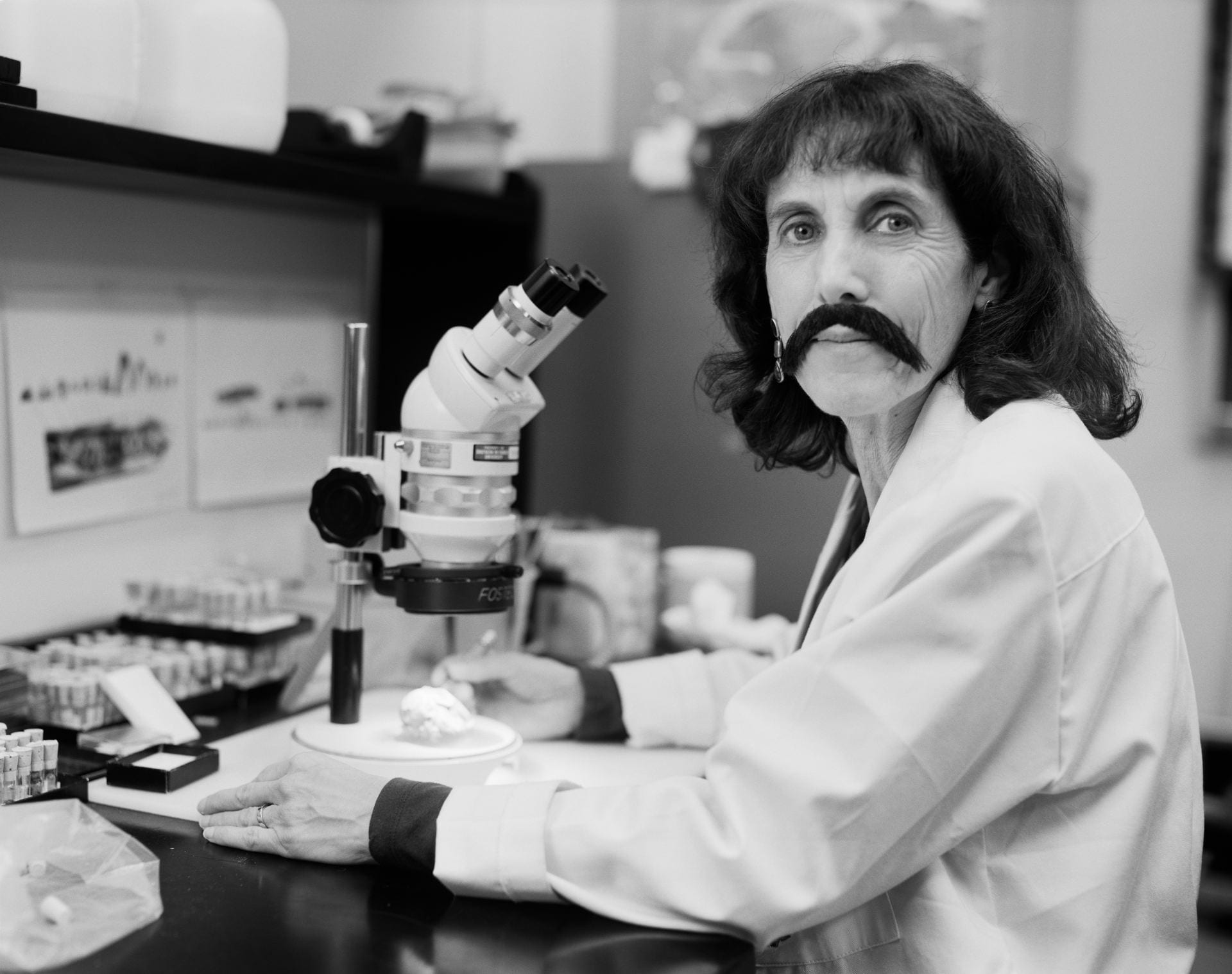
Dr. Alisa Winkler, Vertebrate paleontologist, Southern Methodist University. Above: Dr. Bonnie Jacobs, Paleobotanist, Southern Methodist University. Credit for both photographs: 2015 Kelsey Vance

So did Alisa Winkler, an anatomy professor at UT Southwestern who also conducts research on fossil rodents, rabbits and other ancient mammals at SMU.

A new exhibit at the Smithsonian Museum of Natural History called the “The Bearded Lady Project,” is drawing attention to the sexism that female paleontologists still face in the pursuit of their careers. The exhibit features portraits of women engaged in paleontology research – many in difficult and remote locations – while wearing false beards or mustaches. The tongue-in-cheek question being asked through the exhibit is, “Would they have been granted more respect and credibility had they been men?”

You can read more about this exhibit in The Dallas Morning News here.

About SMU

SMU is the nationally ranked global research university in the dynamic city of Dallas. SMU’s alumni, faculty and nearly 12,000 students in eight degree-granting schools demonstrate an entrepreneurial spirit as they lead change in their professions, communities and the world.


Categories
Earth & Climate Fossils & Ruins Plants & Animals Researcher news SMU In The News Subfeature

New leaf fossils found in Ethiopia’s Mush Valley

  • Post author By 46778533
  • Post date February 12, 2020
  • No Comments on New leaf fossils found in Ethiopia’s Mush Valley

DALLAS (SMU) – Leaf fossils from Ethiopia’s Mush Valley that date back nearly 22 million years have been found by SMU’s Earth Science professors Bonnie Jacobs and Neil J. Tabor and a dozen other international scientists.

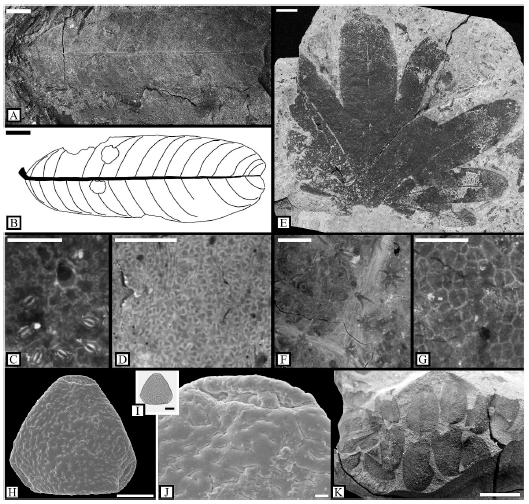
The Mush Valley is the first site in Africa to produce an assemblage of some 2,400 leaves from that time interval, and the first to be studied using multiple lines of evidence, including associated microscopic fossils and chemical constituents, that tell us details about the ancient ecosystem.

Paleobotanical remains that an international team found in Ethiopia’s Mush Valley.

Scientists can use data from the study to answer fundamental questions, like what climate change may look like in the future. Specifically, climate scientists can take information from the study, along with other data, to test models used to estimate future global climate change.

“The past helps us to understand how ecological processes operate under conditions so different from now. It is like the Earth has done experiments for us,” said Jacobs, a world-renowned paleobotanist at SMU (Southern Methodist University).

In addition, using fossils to learn more about what Africa’s prehistoric ecosystems were like can provide context for events in the past, such as when a land bridge developed between Africa and Eurasia 24 million years ago or the environment for primate precursors to the human family.

The fossils found in this study span an interval of 60,000 years during the early Miocene Epoch, which began 23 million years ago. Ellen D. Currano, a paleoecologist at the University of Wyoming, was the lead author of the study.  It was published in the journal Palaeogeography, Palaeoclimatology, Palaeoecology.

You can read more about the work that Jacobs, Currano and the international colleagues have been doing in the Mush Valley here.

About SMU

SMU is the nationally ranked global research university in the dynamic city of Dallas. SMU’s alumni, faculty and nearly 12,000 students in eight degree-granting schools demonstrate an entrepreneurial spirit as they lead change in their professions, communities and the world.


Categories
SMU In The News Videos

SMU robotic arm is helping Beaumont boy make a remarkable recovery after polio-like condition

  • Post author By 46778533
  • Post date January 24, 2020
  • No Comments on SMU robotic arm is helping Beaumont boy make a remarkable recovery after polio-like condition

DALLAS (SMU) – A robotic arm built by mechanical engineering professor Edmond Richer at SMU’s Lyle School of Engineering is delivering a stronger future for young Braden Scott, helping re-create connections between his brain and muscles.

Braden was 5 years old when he came down with acute flaccid myelitis, a rare condition that affects the nervous system.

Watch KXAS-NBC 5’s story to learn more.

About SMU

SMU is the nationally ranked global research university in the dynamic city of Dallas. SMU’s alumni, faculty and nearly 12,000 students in eight degree-granting schools demonstrate an entrepreneurial spirit as they lead change in their professions, communities and the world.


Posts pagination

← Newer Posts 1 2 3 … 110 Older Posts →
Back to top
SMU Logo

© Southern Methodist University