
Videos of our past events are available to view on the pages listed below.
Fall 2025 Events

Prioritizing Faith: International Religious Freedom and U.S. Foreign Policy
September 18, 2025
CPH Assistant Director for Advancement and Partnerships Ashlyn W. Hand (Southern Methodist University) joins the CPH to discuss her new book Prioritizing Faith: International Religious Freedom and U.S. Foreign Policy. This event is cosponsored with the SMU Department of Political Science.
Relying on expert interviews and rich archival analysis, Ashlyn W. Hand traces how Clinton, Bush, and Obama each wove international religious freedom into their foreign policy visions while navigating competing priorities and evolving strategic interests. Through case studies in China, Vietnam, and Saudi Arabia, Hand reveals the inner workings and persistent challenges of American religious freedom policy on the global stage. Timely, insightful, and deeply researched, Prioritizing Faith offers an incisive assessment of the United States’ efforts to promote religious freedom abroad, highlighting the enduring tensions between normative aspirations and the complexities of foreign policy practice.
Spring 2025 Events

Missionary Diplomacy: Religion and Nineteenth-Century American Foreign Relations
April 17, 2025
Professor Emily Conroy-Krutz (Michigan State University) joins the CPH to discuss her new book Missionary Diplomacy: Religion and Nineteenth-Century American Foreign Relations. This event will be hosted by the Center for Presidential History and The George W. Bush Presidential Library.
Missionary Diplomacy illuminates the crucial place of religion in nineteenth-century American diplomacy. From the 1810s through the 1920s, Protestant missionaries positioned themselves as key experts in the development of American relations in Asia, Africa, the Pacific, and the Middle East. Missionaries served as consuls, translators, and occasional trouble-makers who forced the State Department to take actions it otherwise would have avoided. Yet as decades passed, more Americans began to question the propriety of missionaries’ power. Were missionaries serving the interests of American diplomacy? Or were they creating unnecessary problems? As Emily Conroy-Krutz demonstrates, they were doing both. Across the century, missionaries forced the government to articulate new conceptions of the rights of US citizens abroad and of the role of the US as an engine of humanitarianism and religious freedom. By the time the US entered the first world war, missionary diplomacy had for nearly a century created the conditions for some Americans to embrace a vision of their country as an internationally engaged world power. Missionary Diplomacy exposes the longstanding influence of evangelical missions on the shape of American foreign relations.

The Interrogation Rooms of the Korean War: The Untold History
March 27, 2025
2022 MacArthur Fellow and Professor Monica Kim (University of Wisconsin-Madison) joins the CPH alongside the Dedman College Interdisciplinary Institute’s Scott Hawkins Lecture Fund to talk about her book The Interrogation Rooms of the Korean War: The Untold History. In her book, Kim draws on a wealth of archival evidence and her own interviews to analyze the incarceration and interrogation of prisoners of war (POWs) during the armistice negotiations of the Korean War.
Kim looks at how, during the armistice negotiations, the United States and their allies proposed a new kind of interrogation room: one in which POWs could exercise their “free will” and choose which country they would go to after the ceasefire. The global controversy that erupted exposed how interrogation rooms had become a flashpoint for the struggles between the ambitions of empire and the demands for decolonization, as the aim of interrogation was to produce subjects who attested to a nation’s right to govern. The complex web of interrogators and prisoners—Japanese-American interrogators, Indian military personnel, Korean POWs and interrogators, and American POWs—that Kim uncovers contradicts the simple story in US popular memory of “brainwashing” during the Korean War.

Texas: An American History
March 4, 2025
Professor Benjamin Heber Johnson (Loyola University Chicago) joins the CPH, the Clements Center for Southwest Studies, The George W. Bush Presidential Library and Friends of the SMU Libraries to speak about his upcoming book Texas: An American History. His book is an exploration of the multifaceted characters and complex events that have defined the Lone Star State from its inception through today.
Texas is known to outsiders for mob violence, swaggering self-conception, and conservative politics, but Johnson reveals that the state has also been on the forefront of taming frontier violence, establishing LGBTQ rights, and developing modern businesses such as organic food and personal computing. Neither looking away from the dark chapters of Texas history nor letting them overshadow the achievements of democracy and pluralism that are some of the state’s greatest legacies, Johnson offers a balanced and inclusive history of an often contentious and stereotyped region, covering such topics as the persistence of Native Americans, the frontier story of the Alamo, agrarian populism, racial segregation, the state’s porous border with Mexico, and the way historical memory continues to shape the state’s identity. The reality of Texas, Johnson shows us, is even bigger than we think it is.

CPH Book Prize Lecture: The Poverty of the World: Rediscovering the Poor at Home and Abroad, 1941-1968

Cold War Country: How Nashville’s Music Row and the Pentagon Created the Sound of American Patriotism
January 30, 2025
Mississippi State University professor Joseph M. Thompson joins the CPH to discuss his new book Cold War Country: How Nashville’s Music Row and the Pentagon Created the Sound of American Patriotism. In his book, Thompson illuminates the connections between country music and the military during the Cold War.
Cold War Country reveals how country music’s Nashville-based business leaders on Music Row created partnerships with the Pentagon to sell their audiences on military service while selling the music to servicemembers. Beginning in the 1950s, the military flooded armed forces airwaves with the music, hosted tour dates at bases around the world, and drew on artists from Johnny Cash to Lee Greenwood to support recruitment programs. Over the last half of the twentieth century, the close connections between the Defense Department and Music Row gave an economic boost to the white-dominated sounds of country while marginalizing Black artists and fueling divisions over the meaning of patriotism.
Fall 2024 Events

Character Matters: and Other Life Lessons from George H.W. Bush
November 19, 2024
Former Chief of Staff to President George H.W. Bush and New York Times bestselling author Jean Becker joins the CPH to speak on her new book Character Matters: and Other Life Lessons from George H.W. Bush. This account of the character and leadership of America’s 41st President includes stories of learning from the man by his colleagues, friends, and family all revealing how he led by example throughout his life. This event will be hosted by the Center for Presidential History and The George W. Bush Presidential Library.
Becker’s book includes accounts by politicians, journalists, celebrities, authors, and others who spent significant time with President Bush alongside stories from his grandchildren. Some of these colleagues and friends include former Secretaries of State Condoleezza Rice and James A. Baker, comedian Dana Carvey, musician and actress Reba McEntire, journalist Maureen Dowd, novelist Brad Meltzer, biographer Jon Meacham, former British Prime Minister John Major, former Canadian Prime Minister Brian Mulroney, former Secretary of Defense Robert Gates, and author Christopher Buckley.

Who Gets Your Vote? U.S. Foreign Policy Under Kamala Harris or Donald Trump (Third Rail Series)
October 29, 2024
Voters face a momentous choice this November. CPH can help, by offering the perspective of two experts each tasked with making the case for one candidate. A CPH Third Rail Lecture Series event, this evening will not only help voters make a more informed decision, but also demonstrate that even when backing different sides, Americans can still come together and discuss their differences respectfully, politely, and with the ever-present thought that what unites us as citizens of our shared republic is forever greater than our temporary divisions.
October 29 will focus on each candidate’s international agenda. Charles Edel of the Center for Strategic and International Studies will discuss American foreign policy under a potential future Harris administration, while William Ruger of the American Institute for Economic Research will outline the foreign policies of a possible second Trump administration. Jeffrey A. Engel, CPH David Gergen Director, will moderate.

West of the White House AFTER 1900: The Frontier and the American Presidency
October 17, 2024
Please join the Center for Presidential History and the Clements Center for Southwest Studies on October 16th and 17th for West of the White House: The Frontier and the American Presidency, a two night landmark symposium which marks the first sustained collaboration between the Center for Presidential History, the Clements Center for Southwest Studies at Southern Methodist University, and The George W. Bush Presidential Library. The second night, October 17th, will focus on “The Frontier and the Presidency after 1900.” Moderated by Jeffrey Engel, SMU history professor and Director of the Center for Presidential History. Panelists include: T.J. Stiles (Pulitzer Prize winning independent scholar and author), Julie Reed (Penn State University), Ruth Lawlor (Cornell University), Aileen Teague (Texas A&M University), and Augusta Dell’Omo (SMU, CPH Postdoctoral Fellow).
West of the White House assembles a roster of leading historians to examine the connections between the frontier and the American presidency. In ten incisive chapters, participants will consider the experiences of diverse groups of Americans not always found in the canon of past events, from Native Hawai’ian women at the turn of the twentieth century and Indigenous civil rights activists to impoverished miners in Civil War-era Colorado and Mexican immigrants intent on crossing the border to claim American citizenship during the Reagan Administration. Their actions—and the response of the Executive Branch—have shaped international conversations about sovereignty, spurred the creation of new legislation, and exposed the limits of federal power in ways that the nation continues to contend with today.

West of the White House BEFORE 1900: The Frontier and the American Presidency
October 16, 2024
Please join the Center for Presidential History and Clements Center for Southwest Studies on October 16th and 17th for West of the White House: The Frontier and the American Presidency, a two night landmark symposium which marks the first sustained collaboration between the Center for Presidential History, the Clements Center for Southwest Studies at Southern Methodist University, and The George W. Bush Presidential Library. On the first night, October 16th, the theme of the symposium will be “The Frontier and the Presidency before 1900.” Moderated by Andrew Graybill, Professor of History at SMU. Panelists include: Nicholas Guyatt (University of Cambridge), Carolyn Levy (University of Washington), Andrew Isenberg (University of Kansas), Cecily Zander (Texas Woman’s University and SMU, CPH Senior Fellow), and Mallory Huard (Hood College).
West of the White House assembles a roster of leading historians to examine the connections between the frontier and the American presidency. In ten incisive chapters, participants will consider the experiences of diverse groups of Americans not always found in the canon of past events, from Native Hawai’ian women at the turn of the twentieth century and Indigenous civil rights activists to impoverished miners in Civil War-era Colorado and Mexican immigrants intent on crossing the border to claim American citizenship during the Reagan Administration. Their actions—and the response of the Executive Branch—have shaped international conversations about sovereignty, spurred the creation of new legislation, and exposed the limits of federal power in ways that the nation continues to contend with today.

Who Gets Your Vote? U.S. Domestic Policy Under Kamala Harris or Donald Trump (Third Rail Series)
September 30, 2024
Voters face a momentous choice this November. CPH can help, by offering the perspective of two experts each tasked with making the case for one candidate. A CPH Third Rail Lecture Series event, this evening will not only help voters make a more informed decision, but also demonstrate that even when backing different sides, Americans can still come together and discuss their differences respectfully, politely, and with the ever-present thought that what unites us as citizens of our shared republic is forever greater than our temporary divisions.
September 30 will focus on each candidate’s domestic agenda, featuring Peniel Joseph of the University of Texas-Austin making the case for a possible incoming Harris administration, and Stephen Moore of the Heritage Foundation outlining the programs and policies of a potential second Trump administration. Jeffrey A. Engel, CPH David Gergen Director, will moderate.

Made in China: When US-China Interests Converged to Transform Global Trade
September 26, 2024
Professor and former Center for Presidential History fellow Elizabeth O’Brien Ingleson (London School of Economics) joins the CPH to speak about her new book Made in China: When US-China Interests Converged to Transform Global Trade. In her book, Ingleson discusses how the interests of American businesses and the Chinese state converged to reframe the Chinese economy and their place in the global market.
Ingleson argues that the convergence of the world’s largest communist state and the forces of global capitalism began in the 1970s, as China and the United States reopened trade. She examines how rapprochement between the United States and China and deindustrialization within the US created the environment for this convergence and examines the shifts in diplomacy, politics, business, and labor that underscored China’s integration into the global market. In so doing, Ingleson reveals a fundamental change in perceptions of trade with China among the American business community. Where once China had been a dreamed of destination for American exports, in the 1970s American and Chinese businesspeople and officials had reframed China to become a manufacturing giant in waiting.

Making the Presidency: John Adams and the Precedents That Forged the Republic
September 17, 2024
Center for Presidential History Senior Fellow and Executive Director of the George Washington Presidential Library Lindsay Chervinsky joins the CPH to speak about her new book, Making the Presidency: John Adams and the Precedents That Forged the Republic. This account of America’s second president illuminates how John Adams tackled the immense challenges posed to him and left a major mark on the office of the presidency, all the while fending off the machinations of political rivals like Thomas Jefferson and obstruction from his own cabinet.
Chervinsky’s work paints a portrait of the man and his times, detailing the pivotal role he played in the creation of American political norms and the role of the presidency. Chervinsky is a presidential historian, and also the author of The Cabinet: George Washington and the Creation of an American Institution and a regular podcast guest, appearing frequently on the Listening to America podcast. She will assume her role at the George Washington Presidential Library on July 22nd, 2024.
Spring 2024 Events
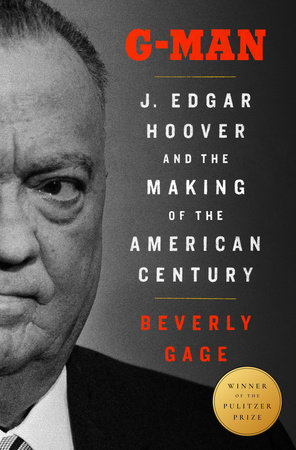
G-Man: J. Edgar Hoover and the Making of the American Century
May 9, 2024
Professor Beverly Gage (Yale University) speaks on her new, Pulitzer Prize winning, biography of J. Edgar Hoover: G-Man: J. Edgar Hoover and the Making of The American Century. In this book, Gage creates a portrait of a man who dominated half a century of American history and planted the seeds for much of today’s conservative political landscape.
Gage’s monumental work explores the full sweep of Hoover’s life and career, from his birth in 1895 to a modest Washington civil-service family through his death in 1972. In her nuanced and definitive portrait, Gage shows how Hoover was more than a one-dimensional tyrant and schemer who strong-armed the rest of the country into submission. G-Man places Hoover back where he once stood in American political history–not at the fringes, but at the center–and uses his story to explain the trajectories of governance, policing, race, ideology, political culture, and federal power as they evolved over the course of the 20th century.

The Liberty to Take Fish: Atlantic Fisheries and Federal Power in Nineteenth-Century America
April 18, 2024
Former CPH Postdoctoral Fellow Thomas Blake Earle (Texas A&M – Galveston) speaks on his new book The Liberty to Take Fish: Atlantic Fisheries and Federal Power in Nineteenth-Century America. Through this book, Earle sheds light on an oft-forgotten aspect of early American statecraft and diplomacy: conflict over fisheries in the North Atlantic with Britain.
In The Liberty to Take Fish, Earle offers an incisive and nuanced history of the long American Revolution, describing how aspirations to political freedom coupled with the economic imperatives of commercial fishing roiled relations between the young United States and powerful Great Britain.
The Army under Fire: The Politics of Antimilitarism in the Civil War Era

March 20, 2024
Former CPH Postdoctoral Fellow Cecily Zander (Texas Woman’s University) speaks on her new book The Army under Fire. Through her book, Zander covers Civil War era anti-militarism as she offers a new and insightful perspective on the Civil War that serves as a fine addition to that period’s scholarship.
In The Army under Fire, Zander explores anti-militarism during the Civil War era, focusing on the political debates over the size and use of America’s armed forces that occurred as the nation was immersed in brutal internecine warfare. Zander examines how America’s prominent politicians interacted with the military and how they often failed to understand the value of the regular soldier, often to the detriment of the war effort.
The Triumph of Broken Promises: The End of the Cold War and the Rise of Neoliberalism
February 19, 2024

The winner of CPH’s inaugural book prize, Fritz Bartel speaks on his new book that discusses the way that the economic shocks of the 1970s hastened both the end of the Cold War and the rise of neoliberalism by forcing governments to impose austerity on their own people.
In a sweeping narrative, The Triumph of Broken Promises tells the story of how the pressure to break promises spurred the end of the Cold War. In the West, neoliberalism provided Western leaders like Ronald Reagan and Margaret Thatcher with the political and ideological tools to shut down industries, impose austerity, and favor the interests of capital over labor. But in Eastern Europe, revolutionaries like Lech Wałęsa in Poland resisted any attempt at imposing market discipline. Mikhail Gorbachev tried in vain to reform the Soviet system, but the necessary changes ultimately presented too great a challenge.

Muppets in Moscow: The Unexpected Crazy True Story of Making Sesame Street in Russia
January 24, 2024
Award-winning American television producer, filmmaker, and journalist Natasha Lance Rogoff discusses her book, The Muppets in Moscow, the experience of creating Ulitsa Sezam, the Russia adaption of the beloved American children’s show Sesame Street.
Amidst bombings, assassinations, and a military takeover of the production office, Lance Rogoff and the talented Moscow team of artists, writers, musicians, filmmakers, and puppeteers remained determined to bring laughter, learning, and a new way of seeing the world to children in Russia, Ukraine and across the former Soviet empire. With a sharp wit and compassion for her colleagues, Lance Rogoff observes how cultural clashes colored nearly every aspect of the production—from the show’s educational framework to writing comedy to the new Russian Muppets themselves—despite the team’s common goal.
Fall 2023 Events

The Nuclear Club: How America and the World Policed the Atom from Hiroshima to Vietnam
December 4, 2023
Historian Jonathan R. Hunt (US Navel War College and US Air War College) reveals in his new book, The Nuclear Club, how a coalition of powerful and developing states embraced global governance in hopes of a bright and peaceful tomorrow.
While fears of nuclear war were ever-present, it was the perceived threat to their preeminence that drove Washington, Moscow, and London to throw their weight behind the 1963 Limited Test Ban Treaty (LTBT) banishing nuclear testing underground, the 1967 Treaty of Tlatelolco banning atomic armaments from Latin America, and the 1968 Nuclear Non-Proliferation Treaty (NPT) forbidding more countries from joining the most exclusive club on Earth.
Ours Was the Shining Future: The Rise and Fall of the American Dream
November 13, 2023
Drawing on decades of writing about the economy for The New York Times, Pulitzer Prize–winning writer David Leonhardt examines the past century of American history, from the Great Depression to today’s Great Stagnation, in search of an answer for the rise, fall, and revival of the American Dream.
Ours Was the Shining Future is a sweeping narrative full of innovation and grit, human drama and hope. Featuring the trailblazing figures who helped shape the American dream—Frances Perkins, Paul Hoffman, Cesar Chavez, Robert Kennedy, A. Philip Randolph, Grace Hopper, and more—this engaging history reveals the power of grassroots democratic movements from across the political spectrum. And though the American dream feels lost to us now, Leonhardt shows how Americans—if they commit themselves to transforming the economy, as they did in the past—have the power to revive the dream once more.
Confronting Saddam Hussein: George W. Bush and the Invasion of Iraq
October 19, 2023
In Confronting Saddam Hussein, the eminent historian of US foreign policy Melvyn P. Leffler analyzes why the US chose war and who was most responsible for the decision.
Employing a unique set of personal interviews with dozens of top officials and declassified American and British documents, Leffler vividly portrays the emotions and anxieties that shaped the thinking of the president after the shocking events of 9/11. He shows how fear, hubris, and power influenced Bush’s approach to Saddam Hussein’s Iraq. At the core of Leffler’s account is his compelling portrait of Saddam Hussein. A compelling reassessment of George W. Bush’s intervention in Iraq, Confronting Saddam Hussein provides a provocative reinterpretation of the most important international event of the 21st century.
Freedom’s Dominion: A Saga of White Resistance to Federal Power
September 15, 2023
A prize-winning historian, Jefferson Cowie, chronicles a sinister idea of freedom: white Americans’ freedom to oppress others and their fight against the government that got in their way in the Pulitzer Price winning book Freedom’s Dominion: A Saga of White Resistance to Federal Power.
In Freedom’s Dominion, historian Jefferson Cowie traces this complex saga by focusing on a quintessentially American place: Barbour County, Alabama, the ancestral home of political firebrand George Wallace. In a land shaped by settler colonialism and chattel slavery, white people weaponized freedom to seize Native lands, champion secession, overthrow Reconstruction, question the New Deal, and fight against the civil rights movement.
Spring 2023 Events
Mourning the Presidents: Loss and Legacy in American Culture
May 11, 2023
The Center for Presidential History presents a discussion the new book Mourning the Presidents: Loss and Legacy in American Culture with speakers Lindsay Chervinsky, Camille Davis, Sharron Conrad, and Matthew Costello.
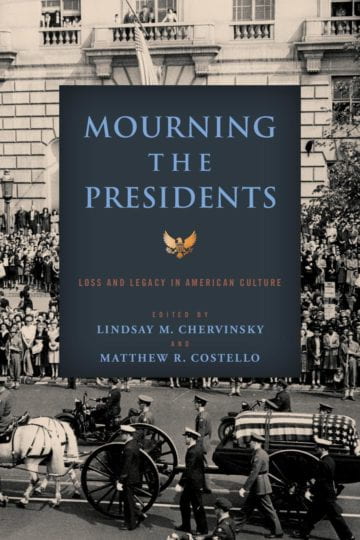
Mourning the Presidents examines the deaths, funerals, mourning rituals, and legacies of twelve presidents, from George Washington to George H. W. Bush. How the nation responds to the death of a president reveals much about the political climate, social values, domestic divisions, and international pressures facing the nation at that moment. By examining how American society mourned twelve presidential deaths, how different communities celebrated or criticized their legacies, and how these trends evolved over time, this volume offers a unique approach to American culture and politics from 1799 to today. This book reveals surprising parallels between different generations of mourners, the role of race and presidential families in shaping legacies, and what presidential deaths reveal about society in the United States at the time of death and today.
The Peacemaker: Ronald Reagan, the Cold War, and the World on the Brink
April 19, 2023

Will Inboden’s new book The Peacemaker: Ronald Reagan, the Cold War, and the World on the Brink gives a masterful account of how Ronald Reagan and hist national security team confronted the Soviets, reduced the nuclear threat, won the Cold War, and supported the spread of freedom around the world.
The Peacemaker reveals how Reagan’s White House waged the Cold Ware while managing multiple crises around the globe. As president, Reagan remade the four-decades-old policy of containment and challenged the Soviets in an arms race and ideological contest that pushed them toward economic and political collapse, all while extending an olive branch of diplomacy as he sought a peaceful end to the conflict. Based on thousands of pages of newly-declassified documents and interviews with senior Reagan officials, The Peacemaker brims with fresh insights into one of America’s most consequential presidents.
Petroleum and Progress in Iran: Oil, Development, and the Cold War

March 29, 2023
Gregory Brew, of Yale University and a CPH Senior Fellow, shares about his new book Petroleum and Progress in Iran: Oil Development, and the Cold War which places oil at the center of the Cold War narrative and contextualizes Iran’s pro-Western alignment and slide into petrolic authoritarianism.
From the 1940s to 1960s, Iran developed into the world’s first ‘petro-state’, where oil represented the bulk of state revenue and supported an industrializing economy, expanding middle class, and powerful administrative and military apparatus. Drawing on both American and Iranian sources, Gregory Brew outlines how the Pahlavi petro-state emerged from a confluence of forces – some global, some local. He shows how the shah’s particular form of oil-based authoritarianism evolved from interactions with American developmentalists, Pahlavi technocrats, and major oil companies, all against the looming backdrop of the United States’ Cold War policy and the coup d’etat of August 1953.
Presidential History in Real Time: Insights to the White House from Inside from Inside Washington
March 7, 2023
Two of the countries premier journalists, Peter Baker and Susan Glasser, speak on the ways that many Americans engage in the White House and Was hington.
SMU’s Center for Presidential History is entering our second decade. Not surprisingly, we begin by looking back, and by looking at the way most Americans engage the White House and Washington in our 21st century: through the eyes, thoughts, and words of the journalists who follow the president every day. Join Peter Baker and Susan Glasser, Chief White House Correspondent for the New York Times and a Staff Writer at the New Yorker respectively, as they reveal and discuss the changes in presidential engagement with the media since CPH’s founding.
The Third Reconstruction: America’s Struggle for Racial Justice in the Twenty-First Century

February 9, 2023
One of our preeminent historians of race and democracy, Peniel E. Joseph (University of Texas, Austin), argues that the period since 2008 has marked nothing less than America’s Third Reconstruction.
The racial reckoning that unfolded in 2020, he argues, marked the climax of a Third Reconstruction: a new struggle for citizenship and dignity for Black Americans, just as momentous as the movements that arose after the Civil War and during the civil rights era. Joseph draws revealing connections and insights across centuries as he traces this Third Reconstruction from the election of Barack Obama to the rise of Black Lives Matter to the failed assault on the Capitol.
Euromissiles: The Nuclear Weapons That Nearly Destroyed NATO
January 10, 2023
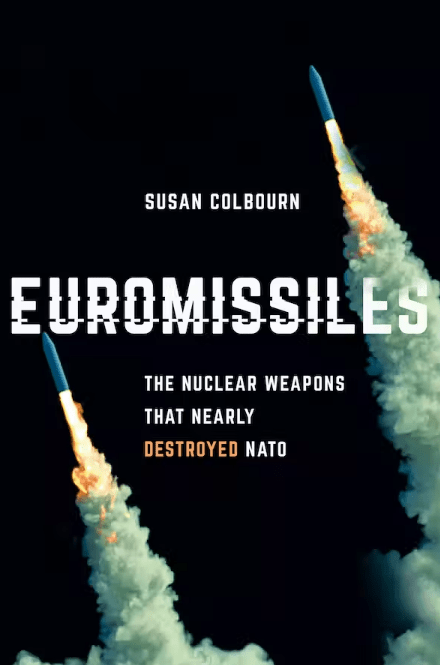
Susan Colbourn (Duke University) discusses her new book which tells the story of the height of nuclear crisis and the remarkable waning of the fear that gripped the globe.
Euromissiles is a history of diplomacy and alliances, social movements and strategy, nuclear weapons and nagging fears, and politics. To tell that history, Colbourn takes a long view of the strategic crisis—from the emerging dilemmas of allied defense in the early 1950s through the aftermath of the INF Treaty thirty-five years later. The result is a dramatic and sweeping tale that changes the way we think about the Cold War and its culmination.
Fall 2022 Events
Ideology in U.S. Foreign Relations: New Histories
December 1, 2022
Christopher McKnight Nichols (The Ohio State University) discusses his new book which explores the ideological landscape of international relations from the colonial era to the present.
Ideology drives American foreign policy in ways seen and unseen. Racialized notions of subjecthood and civilization underlay the political revolution of eighteenth-century white colonizers; neoconservatism, neoliberalism, and unilateralism propelled the post–Cold War United States to unleash catastrophe in the Middle East. Ideologies order and explain the world, project the illusion of controllable outcomes, and often explain success and failure. How does the history of U.S. foreign relations appear differently when viewed through the lens of ideology?
Framing Reconstruction: Presidents, Popular Sentiment, and the Idea of a Lost Moment of Racial Accommodation
November 17, 2022
Gary W. Gallaghers, University of Virginia, and Joan Waugh, UCLA, discuss Reconstruction president, how Union war aims shaped the postwar political landscape, and modern perceptions of the postwar years.
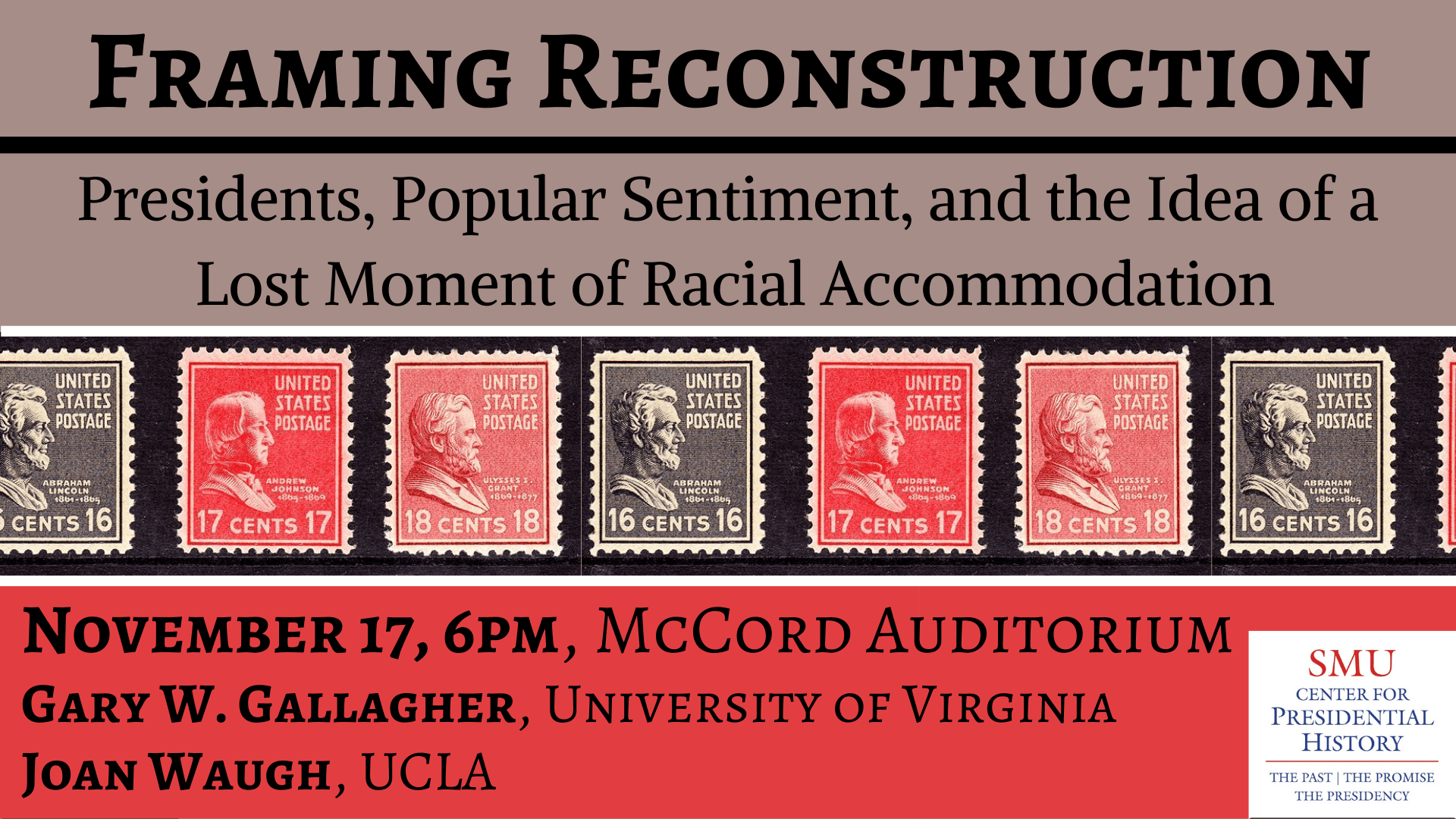
This program explores how the four Reconstruction presidents have been assessed, how Union war aims shaped the postwar political landscape, and how modern perceptions often ignore attitudes and political realities in the postwar years. It suggests that an appreciation of wartime goals and of American traditions regarding a peacetime professional military establishment render the story of Reconstruction not only understandable but also predictable.
Partisans: The Conservative Revolutionaries Who Remade American Politics in the 1990s
October 13, 2022
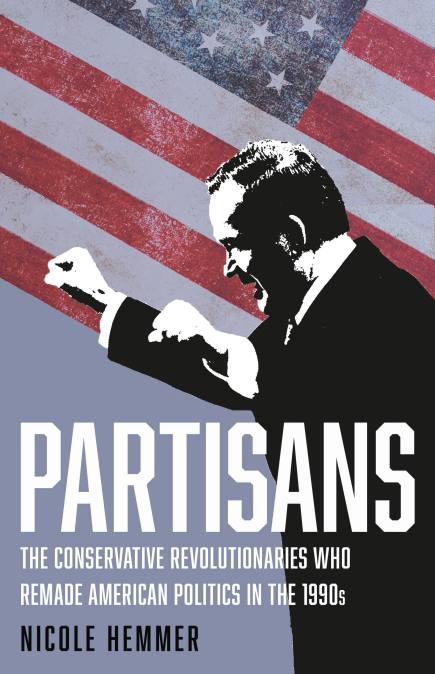
Nicole Hemmer of Vanderbilt University offers a bold, new history of modern conservatism that finds its origins in the populist, right-wing politics of the 1990s.
Historian Nicole Hemmer reveals, in her new book Partisans: The Conservative Revolutionaries Who Remade American Politics in the 1990s, the Reagan coalition was short-lived; it fell apart as soon as its charismatic leader left office. In the 1990s — a decade that has yet to be recognized as the breeding ground for today’s polarizing politics — changing demographics and the emergence of a new political-entertainment media fueled the rise of combative far-right politicians and pundits.
Unsettled Land: From Revolution to Republic, the Struggle

for Texas
September 21, 2022
Historian Sam Haynes presents a bold new history of the origins and aftermath of the Texas Revolution, revealing how Indians, Mexican, and Americans battled for survival in one of the continent’s most diverse regions.
The Texas Revolution has long been cast as an epic episode in the origins of the American West. As the story goes, larger-than-life figures like Sam Houston, David Crockett, and William Barret Travis fought to free Texas from repressive Mexican rule. In Unsettled Land (Basic, 2022), historian Sam Haynes reveals the reality beneath this powerful creation myth.
Red, Blue, and Brown: Tejano History, Politics, and the 2022 Election
September 15, 2022
Historian Max Krochmal and senior editor Jack Herrera discuss the complex and critical role of Tejano politics, in history and today.

Election seasons have always been filled with political and partisan appeals to various groups of people: special interest groups, religious organizations, ethnic voting blocs, and more. One group which has received a dramatic increase in political and journalistic attention over the last few years are Tejanos: Texans of Mexican or Hispanic descent. Much digital ink has been spilled over Tejano voting history and practice: will they vote Democratic blue? Are Republican red numbers increasing since the Trump presidency? But while it can be tempting to presume that so-called interest groups like Tejanos will vote one way or the other—red or blue—it is not so simple. And it never has been.
Spring 2022 Events
Dewey Defeats Truman: The 1948 Election and the Battle for America’s Soul
April 27, 2022

On the eve of the 1948 election, America was a fractured country. Racism was rampant, foreign relations were fraught, and political parties were more divided than ever. Americans were certain that President Harry S. Truman’s political career was over. Truman’s own wife, Bess, did not believe he could win. The only man in the world confident that Truman would win was Mr. Truman himself. And win he did.
Dallas Holocaust and Human Rights Museum: Japanese American Incarceration: The Camps and Coerced Labor during World War II
April 6, 2022

Join Stephanie D. Hinnershitz, author of Japanese American Incarceration: The Camps and Coerced Labor during World War II, and historian with the Institute for the Study of War and Democracy at the National WWII Museum, as she discusses how the U.S. government used incarceration to address labor demands during World War II and how Japanese Americans responded to the stripping of their rights.
This program is presented in partnership with the Center for Presidential History and the Dallas Holocaust and Human Rights Museum, and in conjunction with their current special exhibition, “Courage and Compassion: The Japanese American World War II Experience,” on view at the Museum through June 12, 2022. The special exhibition will be available to view prior to the event, beginning at 6:00 p.m.
A Politics For the Many: American Feminists and the Global Fight for Democratic Equality
March 7, 2022
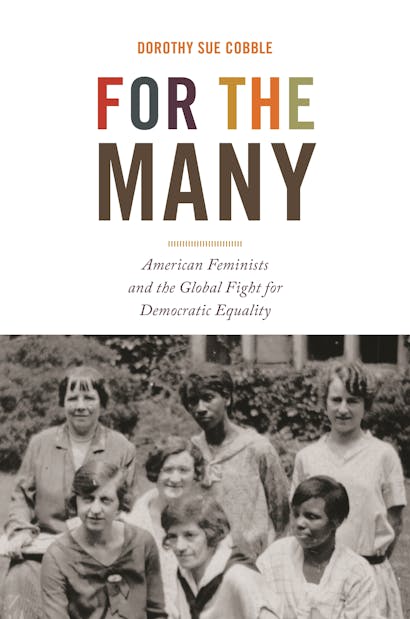 Drawing on her acclaimed new book, For the Many: American Feminists and the Global Fight for Democratic Equality, Dorothy Sue Cobble will discuss how American women moved the nation and the world toward inclusion and equality.
For the Many: American Feminists and the Global Fight for Democratic Equality presents an inspiring look at how U.S. women and their global allies pushed the nation and the world toward justice and greater equality for all. Reclaiming social democracy as one of the central threads of American feminism, Dorothy Sue Cobble offers a bold rewriting of twentieth-century feminist history and documents how forces, peoples, and ideas worldwide shaped American politics.
The Walls Within: The Politics of Immigration in Modern America
February 7, 2022
 Historian Sarah Coleman recounts the numerous battles over US immigrants’ rights since 1965―and how these conflicts reshaped access to education, employment, civil liberties, and more.
The 1965 Hart-Celler Act transformed the American immigration system by abolishing national quotas in favor of a seemingly egalitarian approach. But subsequent demographic shifts resulted in a backlash over the social contract and the rights of citizens versus noncitizens….
Fall 2021 Events
LIVE! Finale – Presidential Crises Podcast
November 11, 2021
 The LIVE FINALE of “Presidential Crises,” season 2 of our podcast “The Past, the Promise, the Presidency.”
With political gridlock in Washington DC at an all time high, government shutdowns–or the threat of them–have become a routine occurrence. National parks close. Federal paychecks stop going out. The National Institute of Health stops admitting new patients. How did we get to the point where it has become normal for the US Government to halt in its tracks? The history, in this case, is quite recent….
Paper Trails: The U.S. Post and the Making of the American West
November 11, 2021
 A groundbreaking history of how the U.S. Post made the nineteenth-century American West.
Historian Cameron Blevins discusses his latest book, Paper Trails: The U.S. Post and the Making of the American West, on the pivotal role of the U.S. postal service during the country’s expansion west….
Good Americans: Asian Americans and Politics in the 20th Century USA
October 14, 2021
 The critical role of Asian Americans in 20th century American politics is explored.
Asian Americans – Documentary Screening
October 8, 2021
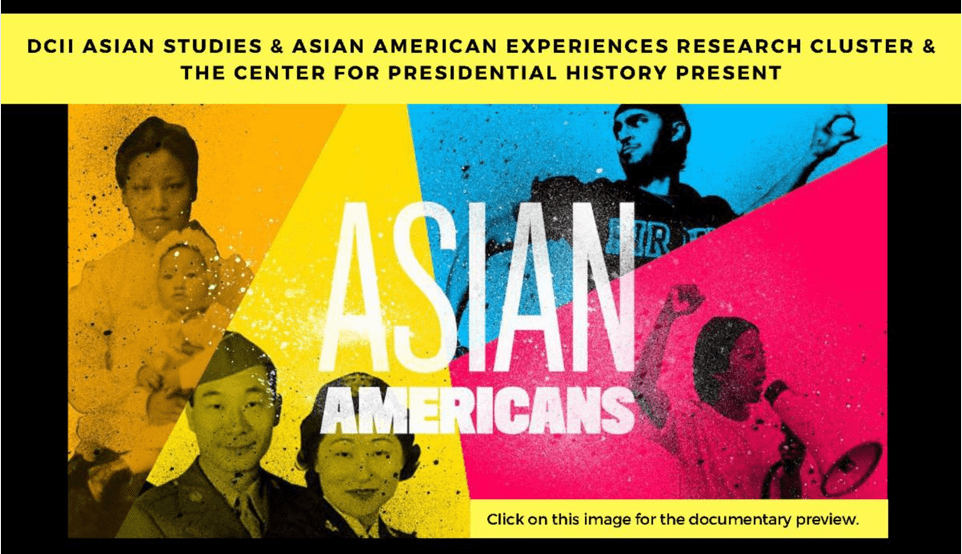 The Dedman College Interdisciplinary Institute Asian Studies & Asian American Experiences Research Cluster and the Center for Presidential History present a documentary screening and open discussion of the award-winning documentary Asian Americans.
The screening featured guest speaker Dr. Scott Kurashige, Chair of Comparative Race and Ethnic Studies at Texas Christian University and moderated by Dr. Crista J. DeLuzio, associate professor of history at SMU.
Charlie Brown’s America: The Popular Politics of Peanuts
October 7, 2021
 Historian Blake Scott Ball takes on the politics of the age-old Peanuts comics, which are at the center of his latest book, Charlie Brown’s America: The Popular Politics of Peanuts.
Despite—or because of—its huge popular culture status, Peanuts enabled cartoonist Charles Schulz to offer political commentary on the most controversial topics of postwar American culture through the voices of Charlie Brown, Snoopy, and the Peanuts gang….
Joseph Smith for President: The Prophet, the Assassin, and the Fight for American Religious Freedom
February 7, 2022
 Author and historian Spencer McBride discusses one of the most important elections in American history and the focus of his latest book, Joseph Smith for President: The Prophet, the Assassin, and the Fight for American Religious Freedom.
By the election year of 1844, Joseph Smith, the controversial founder of the Church of Jesus Christ of Latter-day Saints, had amassed a national following of some 25,000 believers. In less than twenty years, Joseph Smith had transformed the American religious landscape and grown his own political power substantially. Still, the political standing of the Mormon people remained unstable….
Summer 2021 Events
The Man I Knew: The Amazing Story of George H.W. Bush’s Post-Presidency
June 7, 2021
Jean Becker, President George H.W. Bush’s chief of staff (1994-2018), in conversation with Jon Meacham, Pulitzer Prize–winning author, and Chris Buckley, American author and political satirist.
When Jean Becker closed up President Bush’s Houston office in 2019 after his death, she told the Houston Chronicle, “What a pleasure. What a journey.” In The Man I Knew, the former chief of staff to President George H. W. Bush shares an intimate look into the post-presidency of one of America’s most influential one-term presidents.
To Bigotry No Sanction
June 2, 2021
 A historic musical performance featuring members of The Philadelphia Orchestra.
The Center for Presidential History is proud to partner with Reform Congregation Keneseth Israel in their presentation of To Bigotry No Sanction – a new cantata based on George Washington’s historic 1790 letter to the Hebrew Congregation in Newport, RI, composed by Jonathan Comisar and featuring members of The Philadelphia Orchestra.
Spring 2021 Events
Rethinking American Grand Strategy
May 6, 2021
 A wide-ranging rethinking of the many factors that comprise the making of American Grand Strategy.
What is grand strategy? What does it aim to achieve? And what differentiates it from normal strategic thought–what, in other words, makes it “grand”? In answering these questions, most scholars have focused on diplomacy and warfare, so much so that “grand strategy” has become almost an equivalent of “military history.”
Cold War in Chinatown: Fighting for Chinese American Rights in the 1950s
April 28, 2021

In the 1950s, the US government not only called the new People’s Republic of China an enemy of the “free world” but also supported the Chinese Nationalist regime on Taiwan. In response, PRC leader Mao Zedong derided the United States as a “paper tiger” and promised to help defeat American aggression. The resulting international tensions both shaped and limited the politics of Chinese American communities…
The Cigarette: A Political History
April 22, 2021
 The untold political story of the most controversial consumer product in American history.
Tobacco is the quintessential American product. From Jamestown to the Marlboro Man, the plant occupied the heart of the nation’s economy and expressed its enduring myths. But today smoking rates have declined and smokers are exiled from many public spaces. The story of tobacco’s fortunes may seem straightforward: science triumphed over our addictive habits and the cynical machinations of tobacco executives. Yet the reality is more complicated…
Season Finale: The Past, the Promise, the Presidency
 April 15, 2021
Join us LIVE for the season 1 finale of “The Past, the Promise, the Presidency: Race & the American Legacy,” the CPH’s inaugural podcast season. If you’ve been with us from the start, or for any period of time since then, we’re sure you’ve got questions! And comments. Critiques and thoughts.
Stranger Danger: Family Values, Childhood, and the American Carceral State
 April 8, 2021
Beginning with Etan Patz’s disappearance in Manhattan in 1979, a spate of high-profile cases of missing and murdered children stoked anxieties about the threats of child kidnapping and exploitation. Publicized through an emerging twenty-four-hour news cycle, these cases supplied evidence of what some commentators dubbed “a national epidemic” of child abductions…
Engaging the Evil Empire: Washington, Moscow, and the Beginning of the End of the Cold War
 March 22, 2021
In a narrative-redefining approach, Engaging the Evil Empire dramatically alters how we look at the beginning of the end of the Cold War. Tracking key events in US-Soviet relations across the years between 1980 and 1985, Simon Miles shows that covert engagement gave way to overt conversation as both superpowers determined that open diplomacy was the best means of furthering their own, primarily competitive, goals…
Sorting Out the Mixed Economy: The Rise and Fall of Welfare and Developmental States in the Americas
 March 18, 2021
The untold story of how welfare and development programs in the United States and Latin America produced the instruments of their own destruction
In the years after 1945, a flood of U.S. advisors swept into Latin America with dreams of building a new economic order and lifting the Third World out of poverty. These businessmen, economists, community workers, and architects went south with the gospel of the New Deal on their lips, but Latin American realities soon revealed unexpected possibilities within the New Deal itself.
Discussing Race, Settler Colonialism, and Healthcare in the Age of COVID-19
 February 25, 2021
The COVID-19 pandemic has exposed major, sometimes fatal shortcomings in the U.S. healthcare system. Through a conversation about the recent history of healthcare, historians George Aumoithe and Maria K. John will shed light on today’s crisis…
Franchise: The Golden Arches in Black America
 February 11, 2021
From civil rights to Ferguson, Franchise reveals the untold history of how fast food became one of the greatest generators of black wealth in America.
Often blamed for the rising rates of obesity and diabetes among black Americans, fast food restaurants like McDonald’s have long symbolized capitalism’s villainous effects on our nation’s most vulnerable communities…
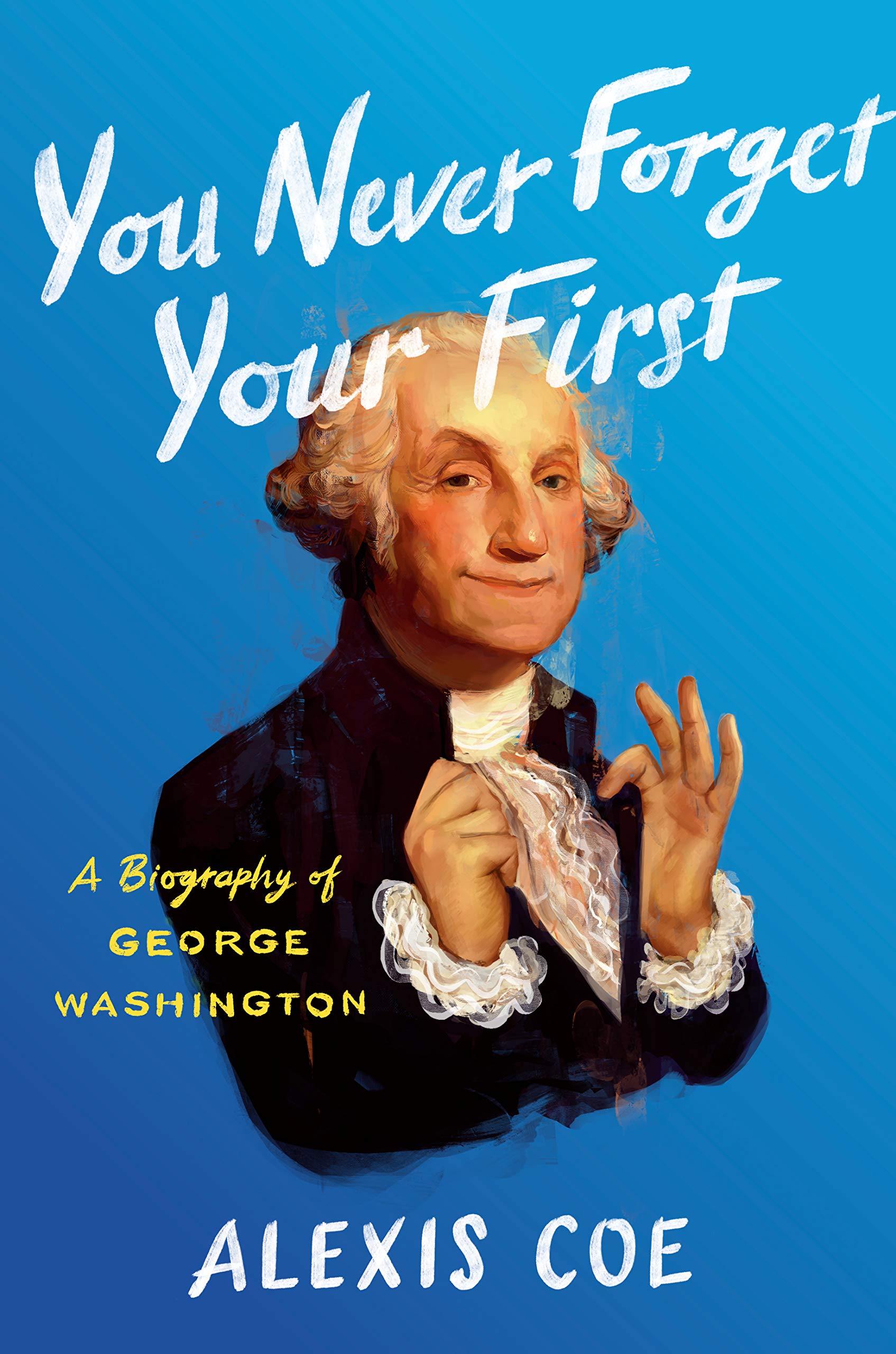
You Never Forget Your First: A Biography of George Washington
 February 10, 2021
A new biography published about George Washington is unlike any other. Described as “form-shattering and myth-crushing,” “keen and savage,” as well as “spirited and engaging,” historian Alexis Coe’s “You Never Forget Your First” chronicles the life of our first president from a 21st century and “decidedly feminist” perspective. Coe says, “I set out to write a book that was true, and different, and that added any kind of diversity in approach, perspective, and, of course, author. I set out to take a giant leap away from hagiography and great man history—and really mean it…
Unprecedented (Again): Historical Perspectives on the Election of 2020 and Beyond
 January 19, 2021
How will the election of 2020 be remembered by history? What, if any, are its historical antecedents, and to what degree is it unprecedented? And, as we look ahead to Inauguration Day, what can history tell us about the next four years?
Join us as we welcome presidential historian Thomas Balcerski for an evening of wide-ranging conversation about the election of 2020 in historical perspective…
A Teach-In on President Trump & the Current Constitutional Crisis
 January 15, 2021
Regardless of where you fall on the political spectrum, two things are clear: we are in an unprecedented constitutional crisis, and President Trump is at the center of it.
In the middle of this crisis, you (like most Americans) may find yourself asking questions you don’t know the answer to…